Thursday, 25 April 2013

Les Miserables Costumes

The Thursday before last, I decided to go down to Portsmouth to see the Les Miserable Costume exhibition that was on at the Historic Dockyard, do some shopping at Gunwarf keys (the fabulous outlet shopping centre), oh and of course visit my brother. 

After having a delicious lunch with my brother (where I ate way too much) I headed to the Historic Dockyard.
The exhibition was held in the Mary Rose Museum (the old one, they are just about to open a brand new one), so every so often you would come across a model of Henry VIII next to a Les Mis costume!!  


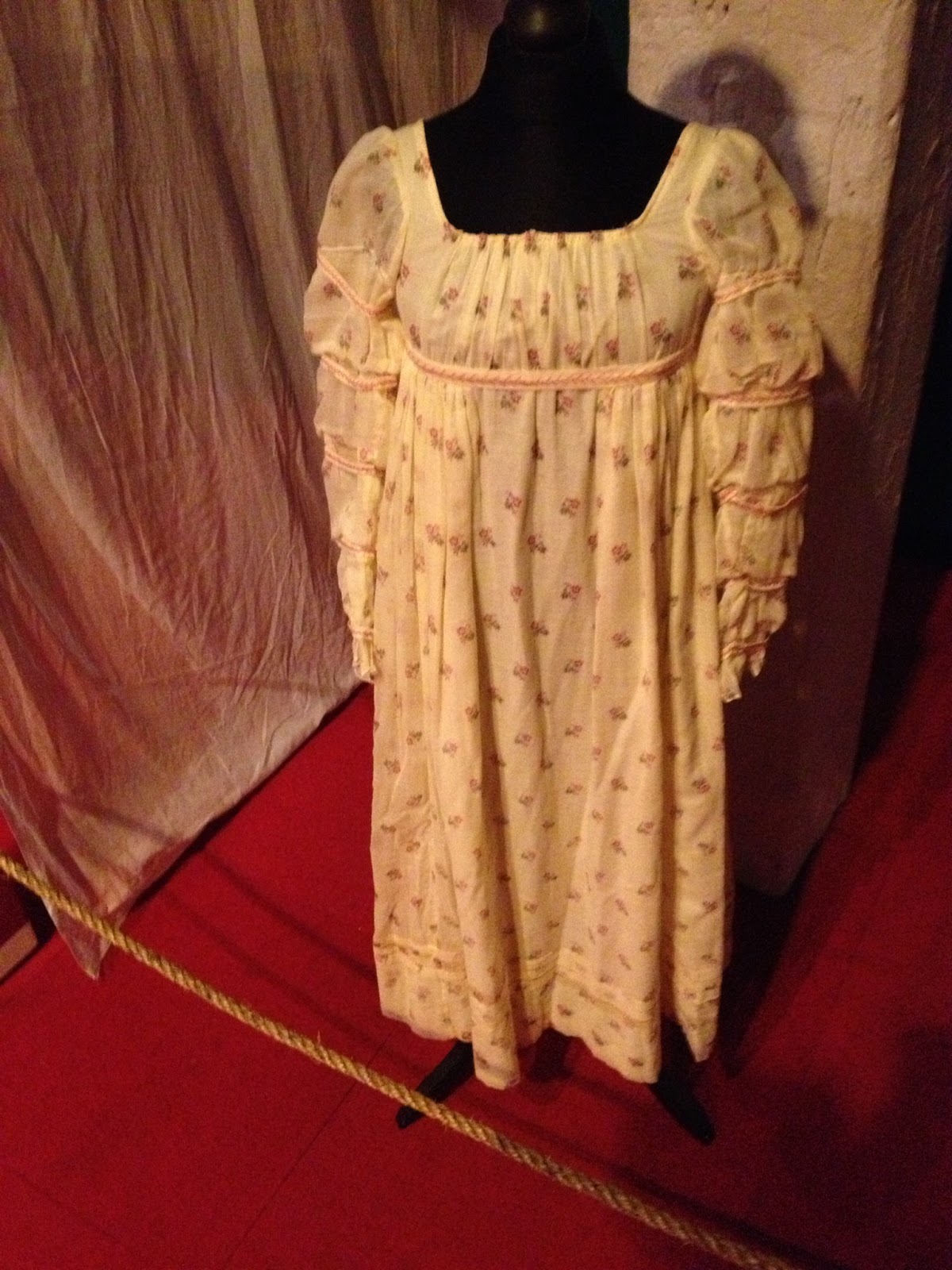
Younger Cosette's gown which she wears in her mother's 'dream' in the hospital.

A bit of a blurry close up! But it is such a beautiful gown with lovely hand embroidery.

Cosette's cap.


The lighting in the museum was not great!!

Fantine's gown that she wears when she is working in the factory. This was one of two identical gowns. The other was rather more distressed in look, to show how her journey from factory worker to prostitute.

detail of the bodice and sleeve.

A Fortnum and Mason's hamper used in a recreation of the rebel's barricade! :) Not sure if they would have had such a hamper!

One of older Cosette's gowns. So pretty!! :)


Lovely lace cuffs. 

Another of Cosette's gowns.


Sadly Cosettes's wedding gown was not on display as the dockyard hadn't been lent it. :(  But I was glad to see the others. :)


Sunday, 14 April 2013

Bletchley Park - Part 2

As well as the main house, there are many other buildings dotted around the grounds. Most of them are large huts which were built and used during the war. Each had a different purpose and were occupied by civilian, RAF and Navy personel. Sadly most of the huts are in a really sad state of repair, but the trust is hoping to raise the money to restore them. On all the huts that are in need of repair, are posters explaining their situation. 

I love them. Such a great idea. :)


There are about 5 or 6 huts that have been restored but only 3 are open to the public. One is used as a lecture/talk room, another as the cafe and the 3rd has been restored to how it would have looked during the war (well most of it has)


This is the cafe, which was was in the old Naval Intelligence hut. In both look, furniture and food it reminded my decidedly of my old prep school dining hall (except the food, which was much better here then at my school). 

I didn't take any pictures of the lecture room hut as it was just an empty room with modern chairs, but I did of the 3rd restored hut. It was either hut 3 or hut 8, I can't completely remember which one it was. Anyway here are some photos of the interior.


This is the codebreaker Alan Turing's office. He was an amazing man who, it is said, shortened the war by 2 years. 


Apparently Turing was paranoid about people stealing his coffee mug, so he chained it to the radiator in his office. (This mug isn't the original one).


Another office was full of what I think are typex machines. I really should have written this post as soon as I came back from Bletchley as my memory is appalling!)


The switch board room with some rather scary mannequins!   


Another room was full of information and artefacts relating to the use of carrier pigeons during the war. This box could hold 2 pigeons.

This one could hold one.

as could this one.


An example of the type of cases that contained messages and were strapped to the leg of a pigeon


More cases


Examples of how the cases were colour-coded.

The sheets the messages were written on. 


A pigeon parachute!!!  


Friday, 1 March 2013

Bletchley Park - Part 1

I have always been fascinated by Bletchley Park. My grandmother was in the WRENs during WW2 working in some capacity with code-breaking and ciphers. She didn't work at Bletchley, but one of her school friends did, and she has often talked about life during the War, which sparked my interest in Bletchley. So last week, when it was half term (one of the perks of working in a school), my father and I decided to go and visit it.

I got a bit happy-snappy so I think I am going to have to split this into two posts. The first will be about Bletchley House. 


This is Bletchley House. I was suprised how small it was, since so many people worked there. Its more like a 19th century upper middle class country house, than a grand mansion on a large estate. 
After the war the house was largely left to fall into disrepair, but thanks to the Bletchley Park Trust (formed in the 1990s) the house is now nearly completely restored. I have to say beautifully restored. Unfortunately, to raise funds to renovated the rest of the Bletchley site, the Trust rent out the rooms for corporate events, so their is ugly modern furniture in every room. However, we were still able to wonder around and see quite a few of the ground floor rooms. 


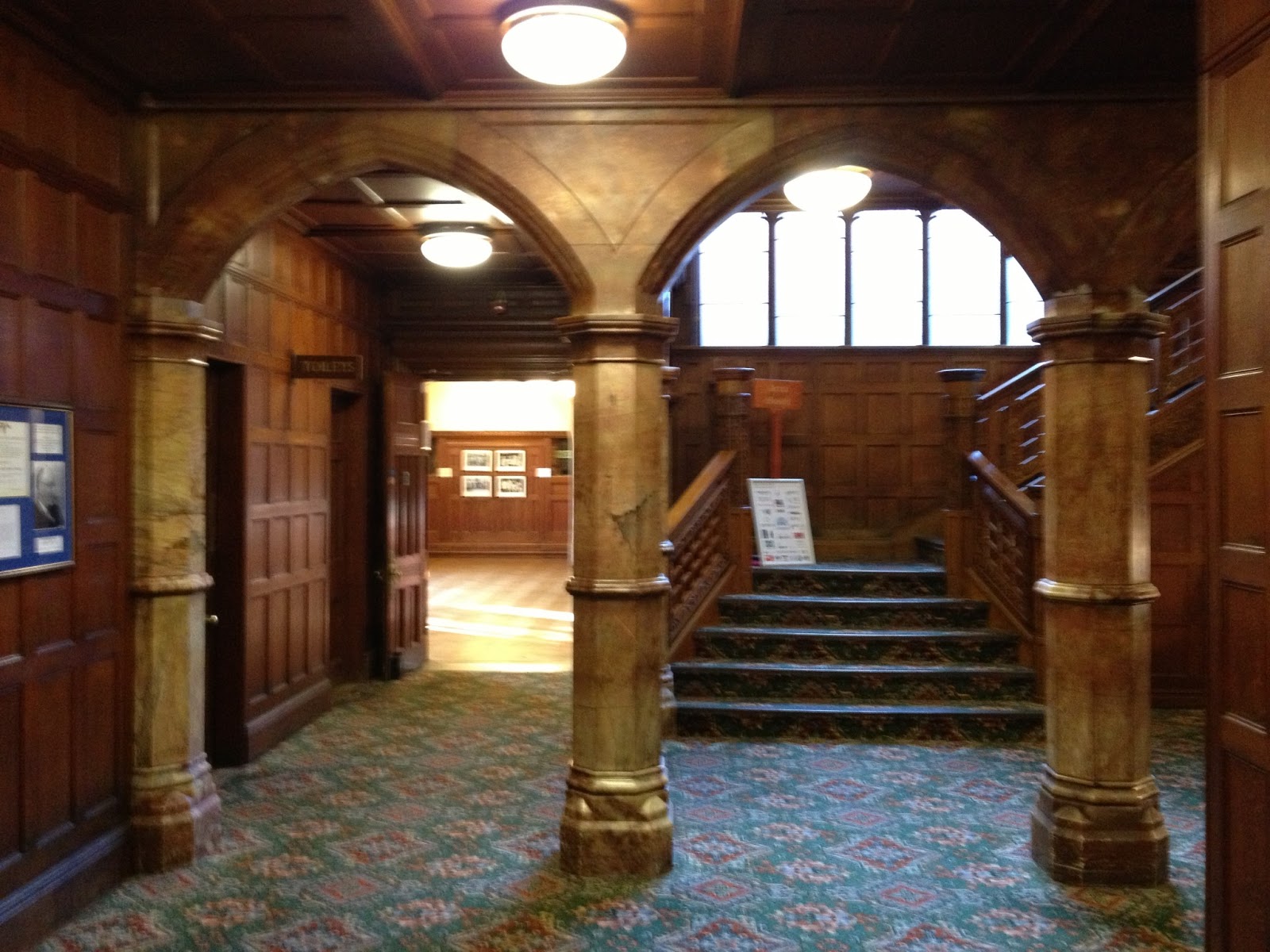
In the hall facing the front door. I am not sure when the house was built (there didn't seem to be any info about it), but in the 1880s it was bought by a wealthy London financier and his wife, Sir Herbert and Lady Leon, who added a wing to the house in the early 1900s. The house has been restored to how it would have looked during the Leon's time, hence all the Edwardian paneling. 


A corridor which seemed to double as a coat/boot room.


You can see the evidence of it being used for corporate events.


The library. I loved this room. If you ignore the ugly furniture, you can imagine what it might have been like during the Edwardian era. During the war the room was divided into 3 offices. It is a decent size, but not big enough to be split into 3 rooms. They must have been 3 tiny offices!!


The bookshelves are all original, and beautiful.

Once again ignore the ugly table.

Amazing original fireplace

The hall (looking away from the front door)


Sadly the first floor was off limits. :( Apparently the rooms on all the floors, apart from the ground floor, are rented out as office space to businesses.

I can't precisely remember what the original function of this room was, though I have a feeling it was the Drawing Room.


The Ballroom, which was used as a cinema during the War.


Detail of the ceiling

Another room off the main hall, well its more like a covered courtyard then a room


I thought that mainly because of the ceiling

 Looking towards the hall.

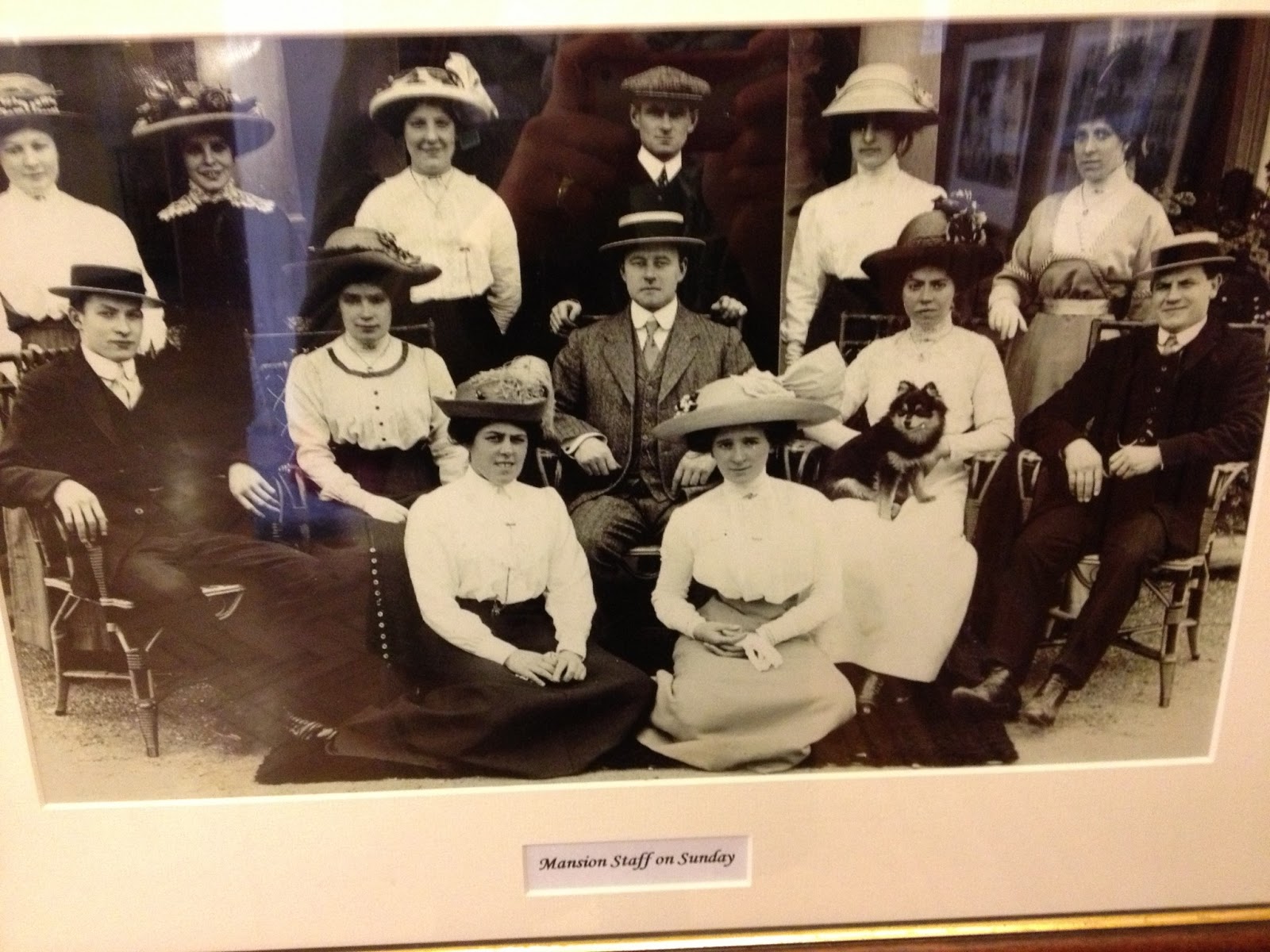
The dining room, which had some lovely old photos of the house and the people who worked their.

 Some of the servants at the beginning of 20th century

Carpenters and maids c.1900


Next post: the rest of the Bletchley Estate.